
Two, for straightforward work. Three once several people are involved.
That is the answer, and it is the least interesting part of this page — because the number is not what causes the problem. What causes the problem is that almost nobody defines what counts as a revision, so round four arrives and both sides are certain they are being reasonable.
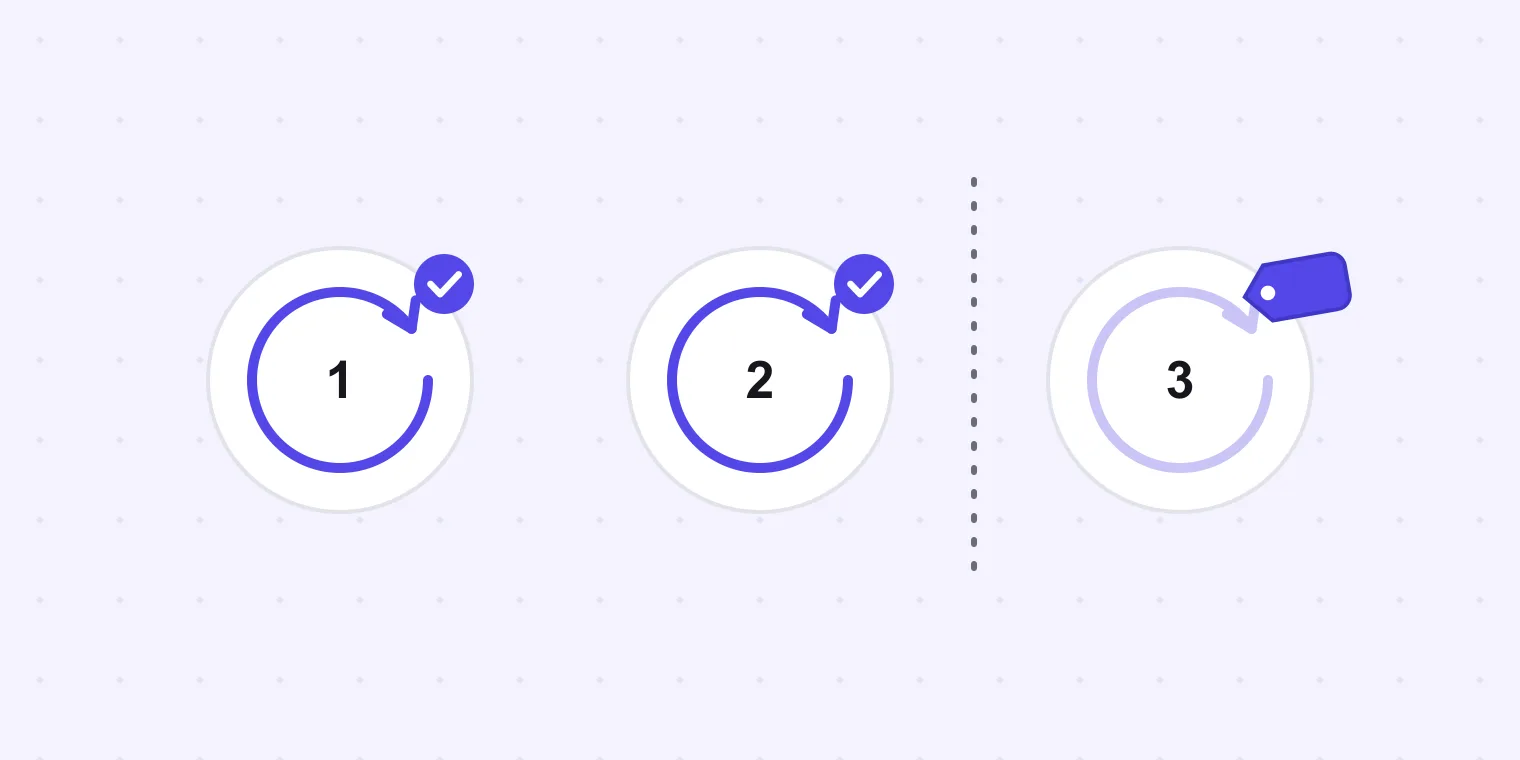
"Unlimited revisions" is a price, not a kindness
It gets offered by people competing on something other than price, and it does three things, all bad.
It moves the cost into your evenings. The work does not disappear because the invoice does not change.
It removes the client's reason to consolidate. Feedback given without a budget attached arrives in dribs — three emails on Tuesday, one more when a colleague sees it, another after the weekend. Not because the client is difficult, but because nothing signalled that a round is a thing with edges.
It attracts exactly the clients it should filter. The ones who read "unlimited" as an invitation are not the ones you want unlimited exposure to.
The exception worth naming: a fixed-scope job so small that revisions cannot run away — a business card from a supplied logo. There, "as many as it takes" is honest and costs you nothing. On anything with a page count, name a number.
Round five is usually not the client's fault
Before tightening the policy, check whether the process is generating the rounds. Four causes, in the order they show up:
The brief did not name the real approver. Rounds one to three were spent pleasing somebody whose opinion never counted. Field 9 of our creative brief template exists for this alone.
The revision did not say what changed. A version that arrives as "updated version attached" makes the client re-read everything, which means they re-read nothing, and the same comment comes back. One line — changed: prices on page 2, hours moved to the back — removes a whole class of round.
You silently did not do something. They asked for a crop you could not make without losing the bleed, and you left it. They notice in round four, and now the round is about trust rather than about the crop. Say what you could not do and why, in the note, every time.
Several people commented separately. Three private replies produce contradictory instructions, and reconciling them costs a round that nobody asked for. One consolidated answer per round, or a shared link where everyone sees each other's notes.
Fix those four and the number in your policy stops being the thing under pressure.
Define the round, then count it
A revision policy that only names a number will be argued about. One that defines the unit will not.
A round is one consolidated set of changes, from all reviewers, delivered together. Not one email. Not one person. If a second batch arrives after you have started, it is the next round — and it is worth saying that out loud in advance rather than discovering it mid-job.
These are not revisions:
- correcting something you got wrong against the brief;
- typos you introduced;
- production changes you need for the file to print.
Fixing your own mistakes is not a round, and counting it as one is the fastest way to make a client resent a fair policy.
These are revisions:
- new content, copy or images arriving after the brief;
- a change of direction, however small it sounds;
- changes from a person who was not in the original approval chain.
That last one is the clause that earns its keep, and it is worth explaining rather than just asserting: work reviewed by somebody new starts a review that already happened.
The policy, in three clauses
Paste into a quote, a proposal or your terms.
REVISIONS

1. This quote includes [two] rounds of revisions. A round is one
   consolidated set of changes covering all reviewers, sent together
   after you have gathered everyone's comments.

2. Corrections of our own errors, and changes needed to make the file
   printable, are not counted as rounds.

3. Further rounds, changes of direction, new content supplied after
   the brief, or review by someone outside the approval chain agreed
   at the start, are charged at [rate] and may affect the delivery
   date. We will tell you before starting, not after.
Clause 3 has two halves and people only ever write the first. "May affect the delivery date" is the half clients actually respond to. Given a choice between a small fee and a slipped deadline, most will decide correctly — but only if they are told about the deadline.
What to say to the client
The policy is for the quote. This is for the conversation, and it should not sound like the quote.
Two rounds are included, which is plenty for most jobs — one to react, one to confirm. If we need more we can, it is just chargeable and it can push the date. The quickest way to stay inside it: gather everyone's comments before sending them, and tell me now if anyone else has to see this.
Said at the start, this is helpful. Said at round three, it is a bill. Same words, and the timing is everything.
When you are already at round six
Stop and name it, in writing, without blame. We are past the two rounds in the quote. I want to finish this well, so here is what I suggest.
Offer a choice, not a complaint. Finish this round at no charge and treat the next as chargeable; or one final consolidated round to close it out. Both are exits; a grievance is not.
Find which of the four causes above did it, and fix that for the next job rather than raising your number. A shop that goes to round six routinely does not have a policy problem.
Where the tooling helps
Ours, so read it as an argument.
Most of what turns rounds into arguments is bookkeeping nobody wants to do. Proofavo does that part: there is exactly one current version, each revision supersedes the last, and the whole history of rounds sits against the job rather than across a thread — so "which round are we on" is a fact rather than a debate.
Everyone opens one link, sees the same version and each other's comments, which removes the contradictory-private-replies round entirely. A proof with an unresolved comment cannot be approved, so "approved, but also…" cannot start a fifth round on its own. And the approval is recorded against the exact file, with a downloadable record naming the version, the person and the time; on Professional that record can also include the rounds in the customer's own words.
What it will not do is write your policy or have the conversation. Those stay yours. Run the loop in the live demo if you want to see what the record looks like.